QEMU 11.1.0 Released with Recent ARM CPU Support & QMP Monitor Hot-Plug

QEMU, the open-source virtualizer and virtual machine monitor, released new 11.1.0 version one day ago.
The new version of this software introduced many new features support for ARM, PowerPC, RISC-V emulation, improved QMP/HMP monitoring support, and fixed various issues.
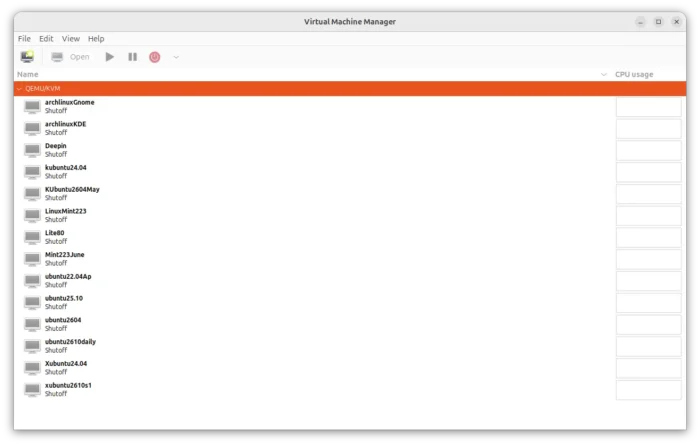
Virtual Machine Manager – GUI frontend/management tool for QEMU/KVM
QEMU 11.1.0 added support for very recent ARM CPU architectures, especially the newer FP8 + SVE/SME AI features and MTE security features. It can now emulate another NXP i.MX 8 development board: the i.MX 8M Plus EVK.
It can now describe the CPU’s cache layout more accurately, and macOS’s Hypervisor Framework (HVF) backend can now support nested virtualization and virtual interrupt controllers.
The HPPA emulator has been updated with newer firmware and fixes that make older HP-UX 9 systems work correctly.
PowerPC emulation now has better support for recovering from unexpected resets and can emulate another type of memory-management hardware used by PowerPC systems.
RISC-V support now covers the K230 board, can identify emulated Tenstorrent CPUs correctly, as well as more CPU features and better support for running RISC-V virtual machines with KVM.
s390x KVM virtualization now supports a CPU feature needed when running virtual machines inside other virtual machines.
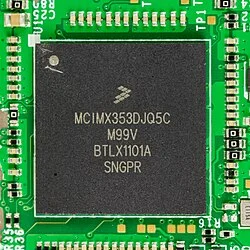
image from Wikipedia.org
The new version added hot-add and hot-remove QMP monitor support using the object-add command and new monitor-qmp type, without stopping or restarting the virtual machine.
And, QMP monitor can now be configured to automatically remove itself when its client disconnects, which is useful for temporary, on-demand QMP connections.
The HMP (Human Monitor Protocol) monitor also support hot-add while the VM is already running, but it cannot remove that monitor dynamically.
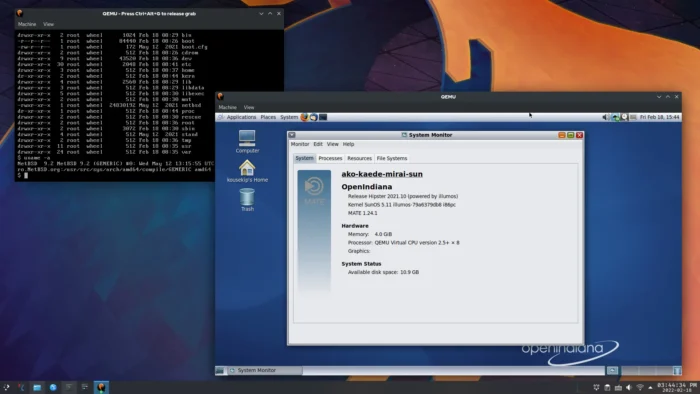
image from wikipedia.org
QEMU can now offload the virtual machine’s clock handling to another userspace process through vhost-user, instead of handling it itself.
The virtual UFS storage now supports some advanced UFS 4.1 storage features, making it behave more like real modern UFS hardware.
The GUI’s virtual console support has been improved, including better handling of different text encodings, along with improvements to the GTK and VNC interfaces.
Other changes include:
- Support Linux’s newer filesystem-mount API
fsmount. - Add
/proc/cpuinfoemulation for ppc, loongarch and m68k CPUs. - VDSO support for better performance under sh4 and sh4eb emulator.
- Emulate two newer Linux file I/O system calls:
preadv2()andpwritev2(), that can read/write multiple memory buffers at once. - Obsolete the
-monargument, in favor of the new-objectwithmonitor-qmpandmonitor-hmptypes.
Get QEMU 11.1.0
The official release note as well as the download link are available in QEMU website via the link below:
For general users, it’s recommended to wait your Linux distribution updates. Fedora has made the new release package for its upcoming 45 version. And, Arch Linux will probably update it in days or weeks.
Ubuntu usually includes the latest QEMU version available at the time of its release. Meaning, the new 11.1.0 will be probably made into next Ubuntu 26.10 repository.
Thanks to the new virtualization HWE stack, Ubuntu 26.04 LTS will finally get it in the next point releases.
Source: UbuntuHandbook