6 Raspberry Pi Handhelds Worth Exploring (If You Have Money to Spend)
Ever since it first appeared as a credit card-sized computer, the Raspberry Pi has quietly reshaped how we think about cheap, hackable hardware. Its ability to run fully-fledged Linux distros and GPIO pins for wiring up sensors and motors all while being cheap is what drew people in.
Of course, recent hikes across its lineup have made things harder for tinkerers, but that’s the price they have to pay for access to a well-established ecosystem.
That ecosystem covers a lot of ground too. Between the standard boards, the Zero line, and the Compute Modules meant to sit inside custom carrier boards, there is a Pi suited for nearly every kind of project.
Makers and small companies have leaned on this range to build all sorts of things, and some of the results barely look like the underlying device anymore.
With this list, we will be taking a look at a few handhelds that will make you wonder what more a Raspberry Pi can do.
The List
| Device | Price | Powered By | Status |
|---|---|---|---|
| Hackberry Pi CM5 | $158 to $1,049 | Raspberry Pi CM5 | In Stock |
| PocketTerm35 | $87.99 to $181.99 | Raspberry Pi 4B / Pi 5 | In Stock |
| Pi Slate | $299 to $749 | Raspberry Pi 5 | In Stock |
| uConsole | $249 | Raspberry Pi CM4 | Partial Stock |
| Cybert. | $199 | Raspberry Pi CM5 | Sold Out |
| SpecFive Strike | $434.99 | Raspberry Pi CM4 | Sold Out |
1. Hackberry Pi CM5
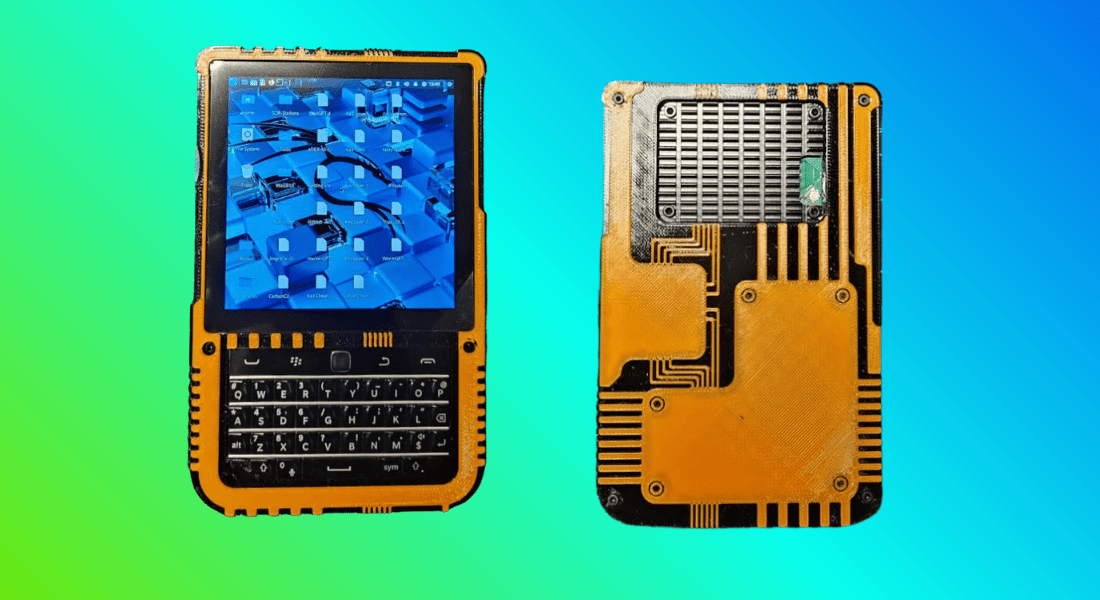
The Hackberry Pi CM5 is an open source handheld built by Zitao, an engineering student at the Technical University of Dresden in Germany.
At the front sits a 4-inch 720×720 touchscreen, paired with a repurposed BlackBerry keyboard (Q10, Q20, or 9900 layouts), and the keys can be remapped through Vial if the default mapping does not suit you.
Powering it is a Raspberry Pi Compute Module 5, running on a quad-core Cortex-A76 chip clocked at 2.4GHz, and a 5000mAh battery keeps it running for roughly five hours on standby or three to four hours of active use.
There are two ways to get one. Elecrow sells a barebones kit for $158 to $168, but you will need to source your own Compute Module 5 and put it together yourself. If you want it ready to use, Carbon Computers sells a fully assembled version starting at $449, with prices climbing to $1,049 for higher RAM and storage.
2. PocketTerm 35
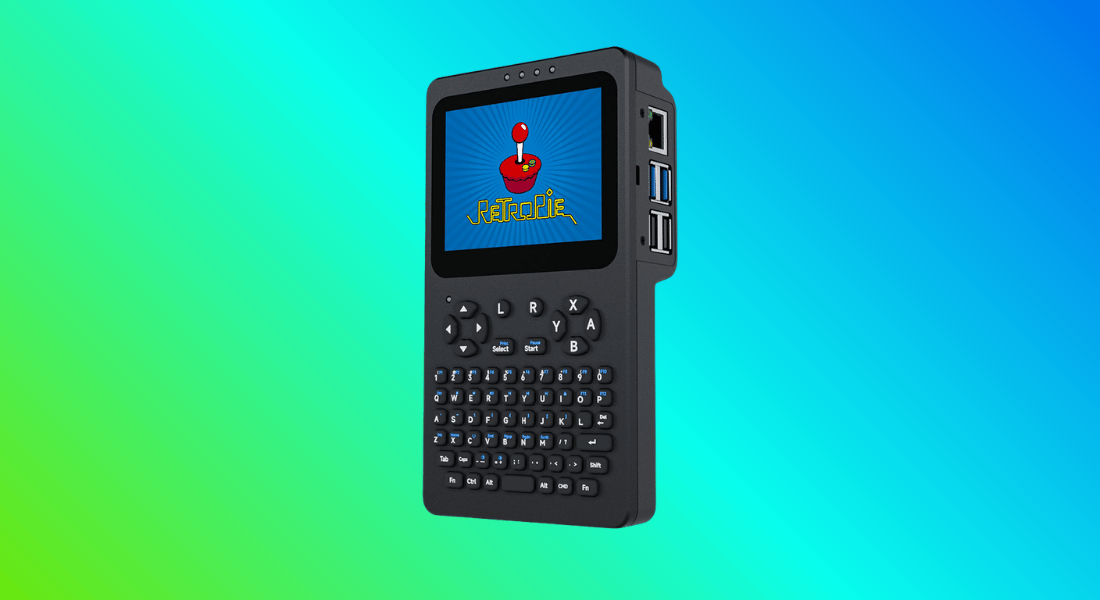
You will notice further on that most handhelds on this list trade the standard Raspberry Pi board for a Compute Module to save space. The PocketTerm35 is Waveshare’s pocketable Linux terminal, built around a full Raspberry Pi 4B or Pi 5.
It features a durable 3.5-inch 640×480 display and a 67-key silicone keyboard that can be used for code entry, command execution, and general editing. An RP2040 chip handles input, screen brightness, and volume control.
The device itself measures 93.5 x 168.5 x 37mm, with an aluminum faceplate on the front and a plastic cover on the back.
Prices on the Waveshare store start at $87.99 and go up to $181.99. The cheap end is the bare accessory kit, useful if you already have a spare Pi board to drop in. The higher end gets you a fully loaded setup with a Pi 4B or Pi 5, a 64GB card, and a 5000mAh battery.
3. Pi Slate
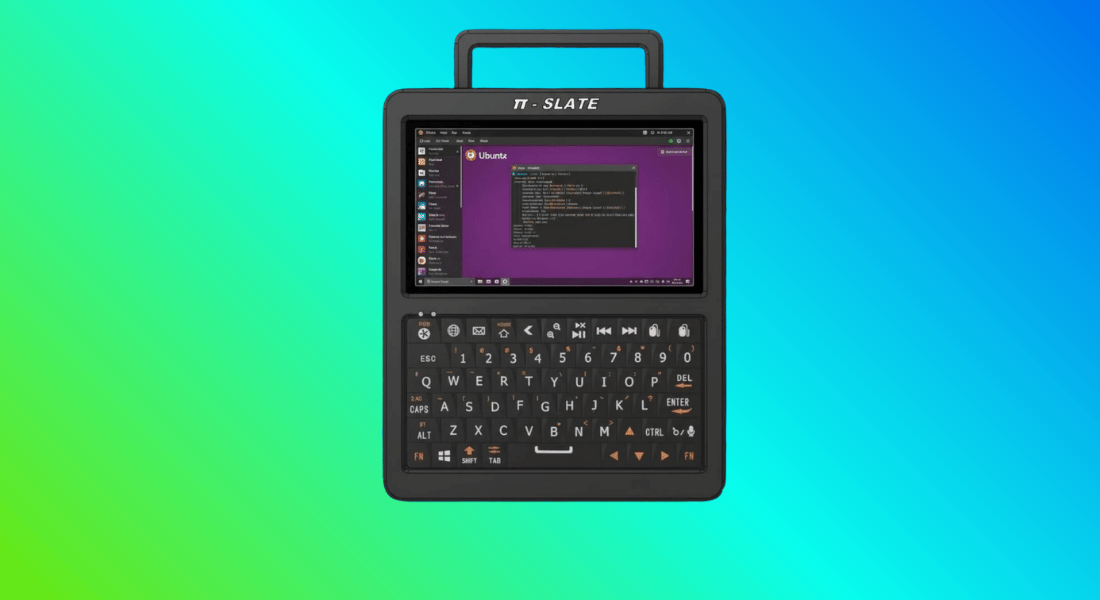
The Pi Slate is Carbon Computers’ take on a portable cybersecurity workstation, built around a Raspberry Pi 5 in a shell slim enough for daily carry. Two integrated antenna mounts sit at the top corners, so GPS, LoRa, or SDR radio modules can be bolted on without modifying the case.
The 5-inch touchscreen runs at 1920×720, and below it sits an RGB backlit keyboard with a gyroscopic cursor built in for pointer control. You get a 10,000 mAH battery as well, which is rated for 3 to 5 hours of use.
Carbon Computers sells the Pi Slate fully assembled, starting at $449 for the 2GB/32GB Pi 5 configuration, climbing to $749 for the 16GB/128GB version with more storage. A barebones kit without the Pi 5 goes for $299, and a separate radio kit with GPS, LoRa, and SDR support costs $149.
4. uConsole
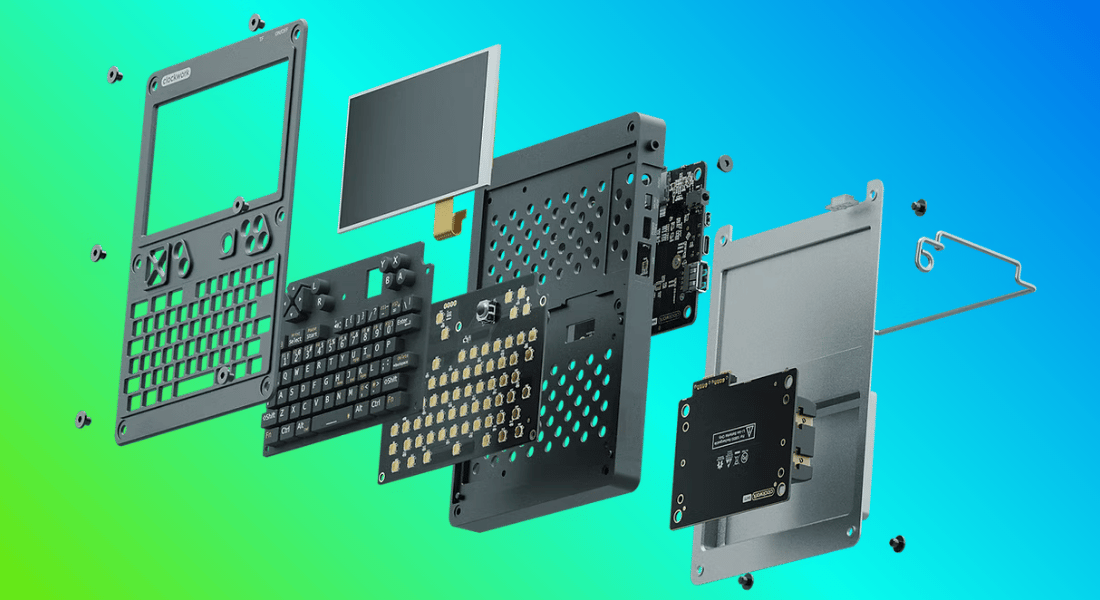
The uConsole does not lock you into one chip. ClockworkPi sells four interchangeable core modules for the same shell, and which one makes sense depends entirely on what you want to do with the thing.
The Raspberry Pi CM4 core is the ideal choice for daily use, coding, emulators, and anything that benefits from Raspberry Pi’s software support. Complementing that, you get a 5-inch display running at 1280×720, with a 74-key backlit keyboard, a trackball that doubles as a mouse, and a D-pad with four buttons wired in for emulator controls.
An optional 4G LTE module adds cellular data, and the whole thing runs on replaceable 18650 Li-Ion batteries rather than a sealed battery pack. Plus, schematics and other design-related files can be found on GitHub.
5. Cybert.
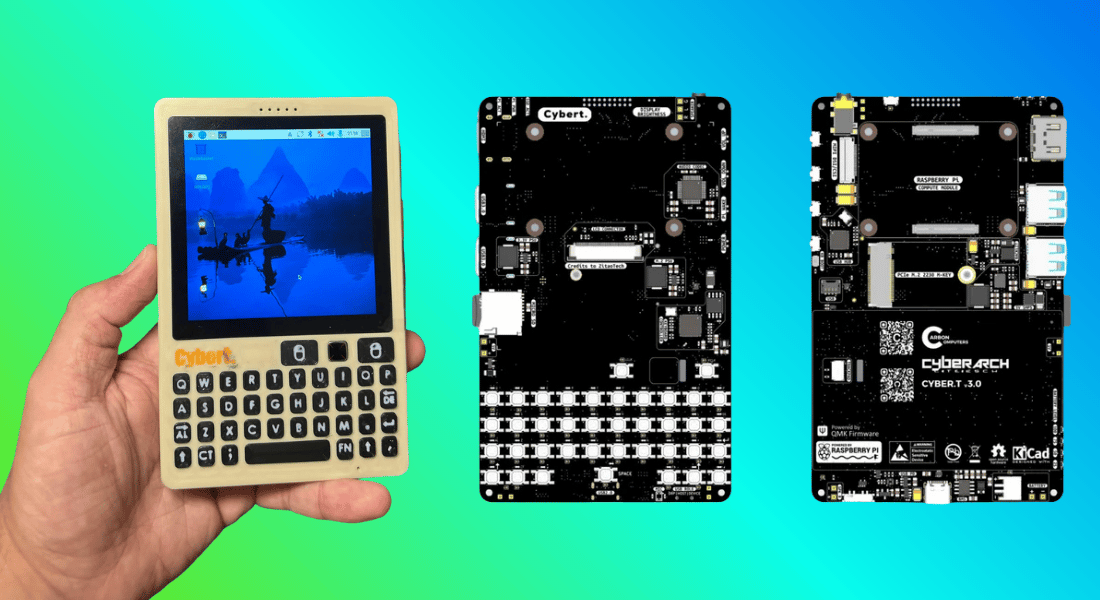
Cybert. is yet another Carbon Computers offering; this one traces back to a concept called the MC01. Initially, it was built around the Raspberry Pi CM4, but later versions added support for the CM5 along with a custom QMK-compatible keyboard and a BlackBerry touch sensor for a cursor.
The handheld is now at v3.2, powered by a CM5, offering two additional USB 3.0 ports along with a standard M.2 SATA slot for adding things like an SSD, AI accelerator, LoRa, or a 4G LTE module.
For the display, it features a 4-inch 720×720 touchscreen and has wide Linux distro support, ranging from Raspberry Pi OS, Kali Linux, to other popular distros.
It is sold as a bare PCB and case, not a finished device, priced at $199 when in stock. You will need to source your own Compute Module, the display, a LiPo battery, and even a BlackBerry 9900 touch sensor separately to finish the build.
6. Strike
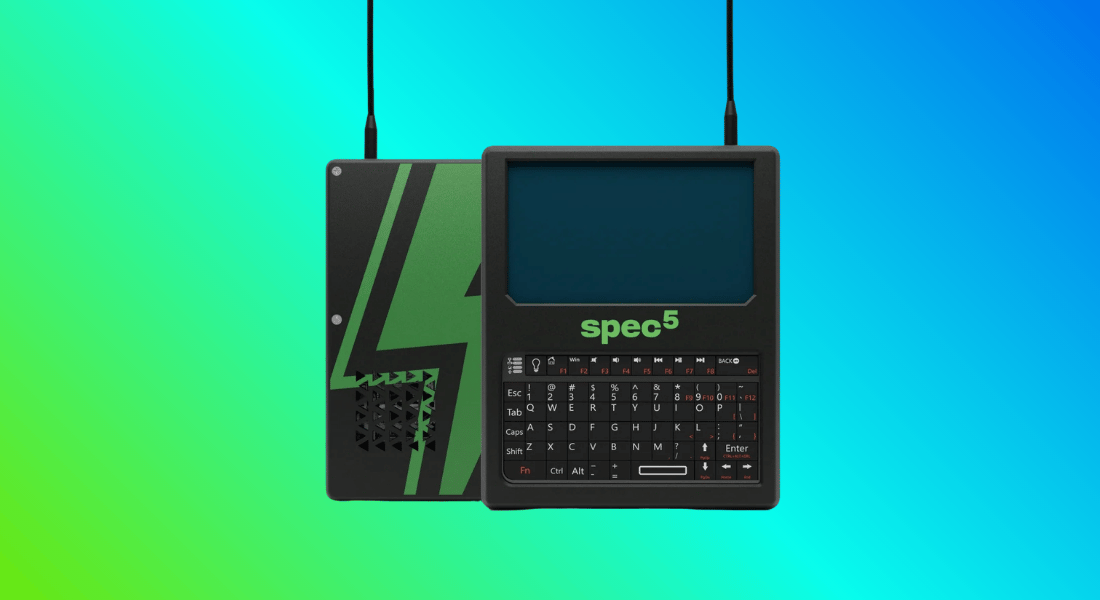
This handheld has a built-in SX1262 LoRa radio, letting you join Meshtastic mesh networks and talk to ATAK, the tactical mapping software used by military and first responder teams.
None of the other handhelds on this list have a radio like this built-in.
A Compute Module 4 sits inside, powering it all, with a 4.3-inch touchscreen and a QWERTY keyboard for tackling daily use, and GPIO, I2C, and SPI headers for anything else you want to wire up.
There are two editions on offer; the Base Edition ships without an SD card, and you have to manually install an operating system like Raspberry Pi OS, RetroPie, or emteria.OS, while the Ready Edition comes preloaded with Raspberry Pi OS and Meshtastic already configured.
At the time of writing, SpecFive only listed the Ready Edition of Strike for $434.99, though every color is currently sold out.
Suggested Read 📖: 11 Interesting ESP32 Microcontroller Projects

Source: It's FOSS