GNOME Mutter 51 Beta Added Native Background Blur

Mutter, the window manager and Wayland compositor used by GNOME, released new 51 Beta version today.
The new version of this GNOME component that manages windows, handles input devices, and draws the desktop, added support for Wayland ext-background-effect-v1 protocol.
It gives Wayland applications a standard way to request background blur to the specific regions of their app windows, while keeping GNOME Shell’s existing appearance unchanged.
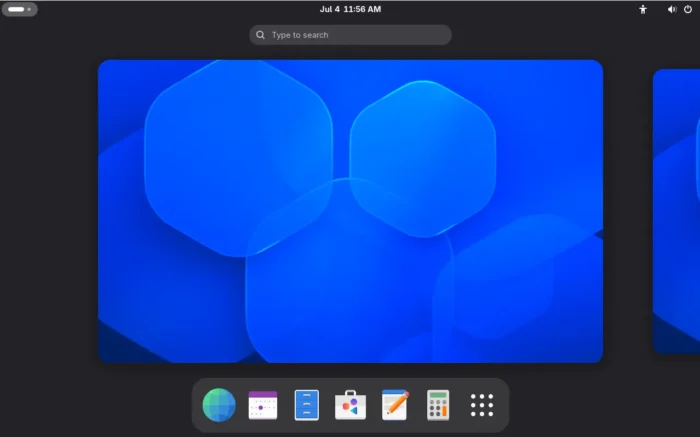
GNOME Desktop
For laptop user, this version added support for the disable-while-typing timeout, allowing to configure the timeout value for how long a touchpad stays disabled after typing by using GSettings schema key.
And, it now recognizes mouse with extra buttons that act like a scroll wheel when held or pressed, and it handles those mouse buttons the same way it already handles trackballs.

This Beta also added a new public get_current_input_device() API that lets applications ask which input device is currently active, instead of having to track it themselves.
It enhanced the grab-op-begin signal by passing the cursor sprite (mouse pointer icon) when a window move or resize starts. That gives GNOME Shell direct access to the cursor’s visual representation and position, enabling more accurate drag-related UI behavior without changing how grab operations themselves work.
It as well introduced a new input panel UI layer for components such as the on-screen keyboard and other text input interfaces, allowing those UI elements to continue receiving input even when another part of the desktop has an input grab, making text input more reliable, especially on touch-enabled devices.
As you might know, GNOME intends to implement the Session Save and Restore feature. The new 51 Beta makes a step by switching from Mutter’s private session management protocol to the standardized Wayland xdg_session_management_v1 for saving and restoring application sessions.
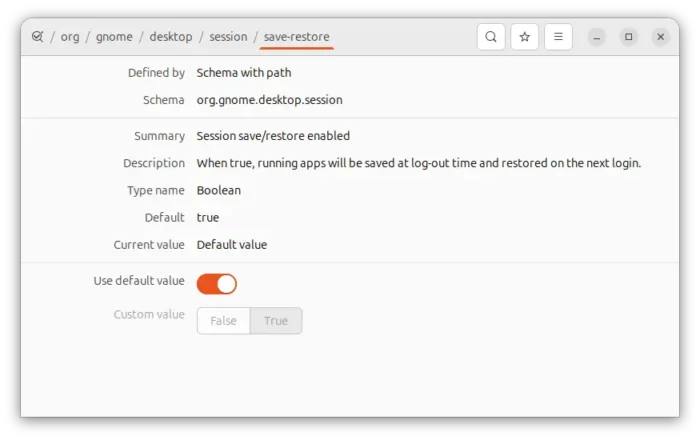
session save and restore dconf key, which does not work so far without the participation of apps.
Mutter 51 beta also added support for external cursor implementations, enabling future features such as cursor effects and custom pointer handling.
It now hides the desktop cursor whenever an input capture session is active, preventing duplicate or misleading cursors when applications such as virtual machines or remote desktop tools take over mouse input.
Other changes in Muter 51 beta include:
- Allow global shortcut inhibitors to inhibit a11y shortcuts.
- Split experimental feature into individual GSettings keys.
- Fix invalid redraw clips on rotated monitors.
- Add transition-removed signal that reliably detect when an animation is removed.
- Improve dynamic frame scheduling.
- Fix blurred display for multiple monitors with fractional monitor scaling (125%, 150%, etc.) and HDR.
- Fix low-contrast on some HDR displays.
For more about the changes, as well as the source tarball, go to Mutter source page in Gitlab.
Get GNOME 51 Beta
GNOME 51 Beta will be released soon in next few days. You may keep an eye on this GNOME Discourse page for the announcement.
For those who want to try it out, Ubuntu 26.10 and Fedora 45 will include the new desktop release, and, Arch Linux user will be available to install it through the Gnome Unstable repository.
And, there’s a nightly build of GNOME OS image allowing to try out the latest GNOME desktop in either virtual machine or real hardware.
Source: UbuntuHandbook