Open Book Touch is Crowdfunding: A Buttonless, Open Hardware Answer to Kindle
Back in 2020, I wrote about Open Book: a DIY, open source e-reader project from developer Joey Castillo that you could solder together yourself… at least in theory. It had a 4.2 inch e-paper screen, seven physical buttons for navigation, and the kind of “anyone with a soldering iron can build one” ambition that attracts a certain kind of small userbase.
Six years later, Castillo is back with Open Book Touch. It is built on the same idea just that it’s more of a ready-to-use, out of the box kind of product this time. If need be, you can still take it apart and modify it as needed. The new project just went live on Crowd Supply.
With “own your data” becoming a way to resist against Big Tech’s walled garden, an open source alternative to Kindle’s ecosystem is exactly the kind of thing that appeals to many of us open source lovers. No account needed, no DRM, nothing “phoning home”. If you have a good ebook coolection, a device like this is worth adding to wishlist, at least for me.
📝 Key Specifications
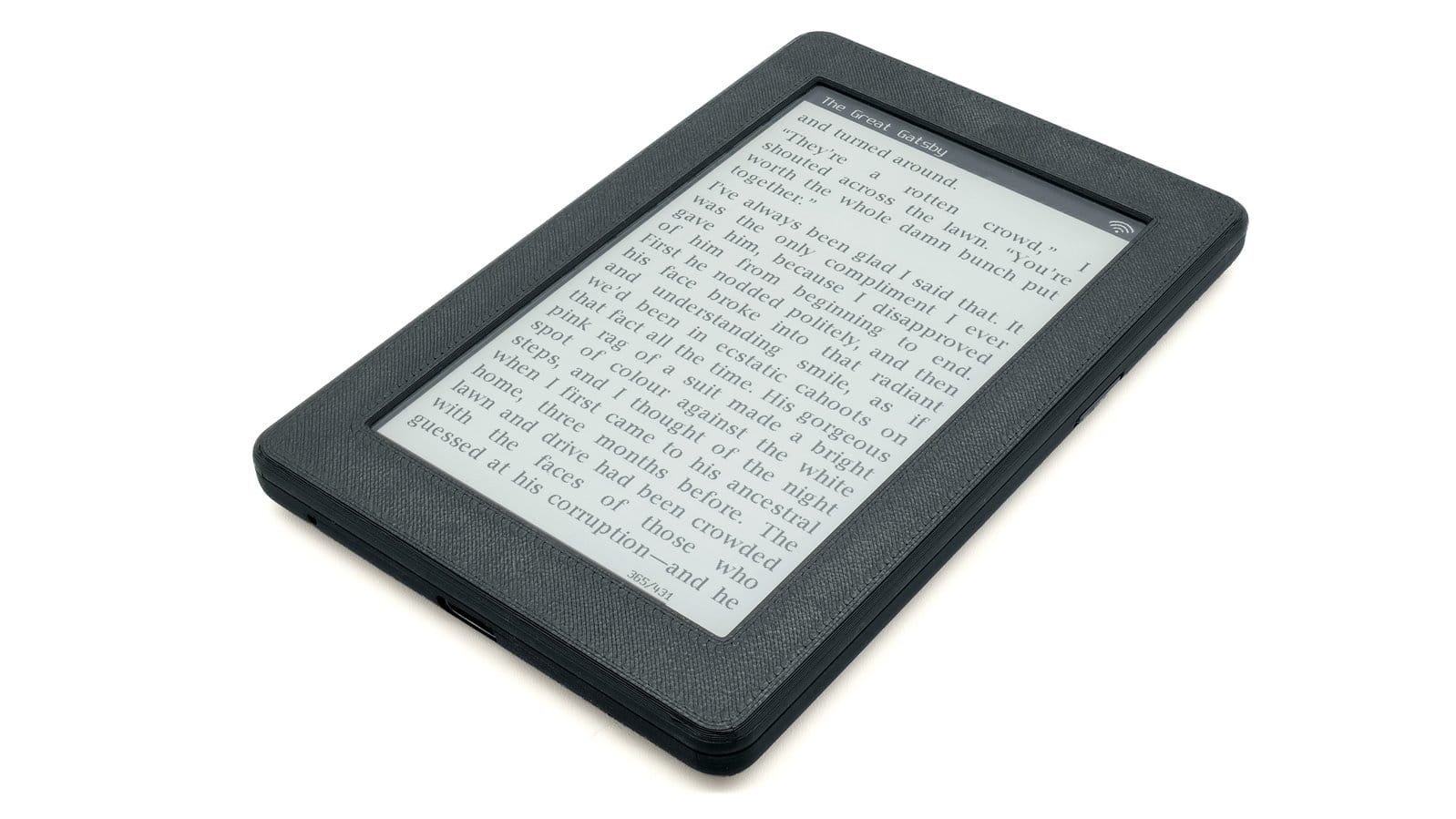
- Display: 4.26″ e-paper touchscreen, 480 × 800 px, warm + cool frontlight
- Processor: ESP32-S3 dual-core, Wi-Fi + Bluetooth LE
- Memory: 16 MB flash, 8 MB PSRAM
- Formats: EPUB and plain text, no DRM
- Storage: microSD card slot
- Interface: USB-C with integrated LiPo charging
- Dimension: 78 × 120 × 10 mm, about 85 g
- Open source: MIT-licensed firmware, open hardware (to be released at shipping)
The base model is $149, with a limited “Author’s Edition” going for $249 during the campaign only.
The most obvious change from the original Open Book is right there on the front. Where the old board had a directional pad, a select button, and dedicated page-turn buttons, Open Book Touch is a single symmetrical slab, just 1 cm thin, with a capacitive touchscreen doing all the work instead. That’s why it is called Open Book Touch, perhaps.
The exclusion of physical buttons makes sense because it is a tiny device. The touchscreen sits on a 4.26 inch e-paper panel at 480 × 800 pixels, working out to roughly 220 ppi, sharper than you’d expect at that size. It’s a 1-bit display at its core meaning fast, crisp black and white for page turns. Slower 2-bit grayscale mode is reserved for the lock screen, so a book cover or your own photo renders in more shades of gray.
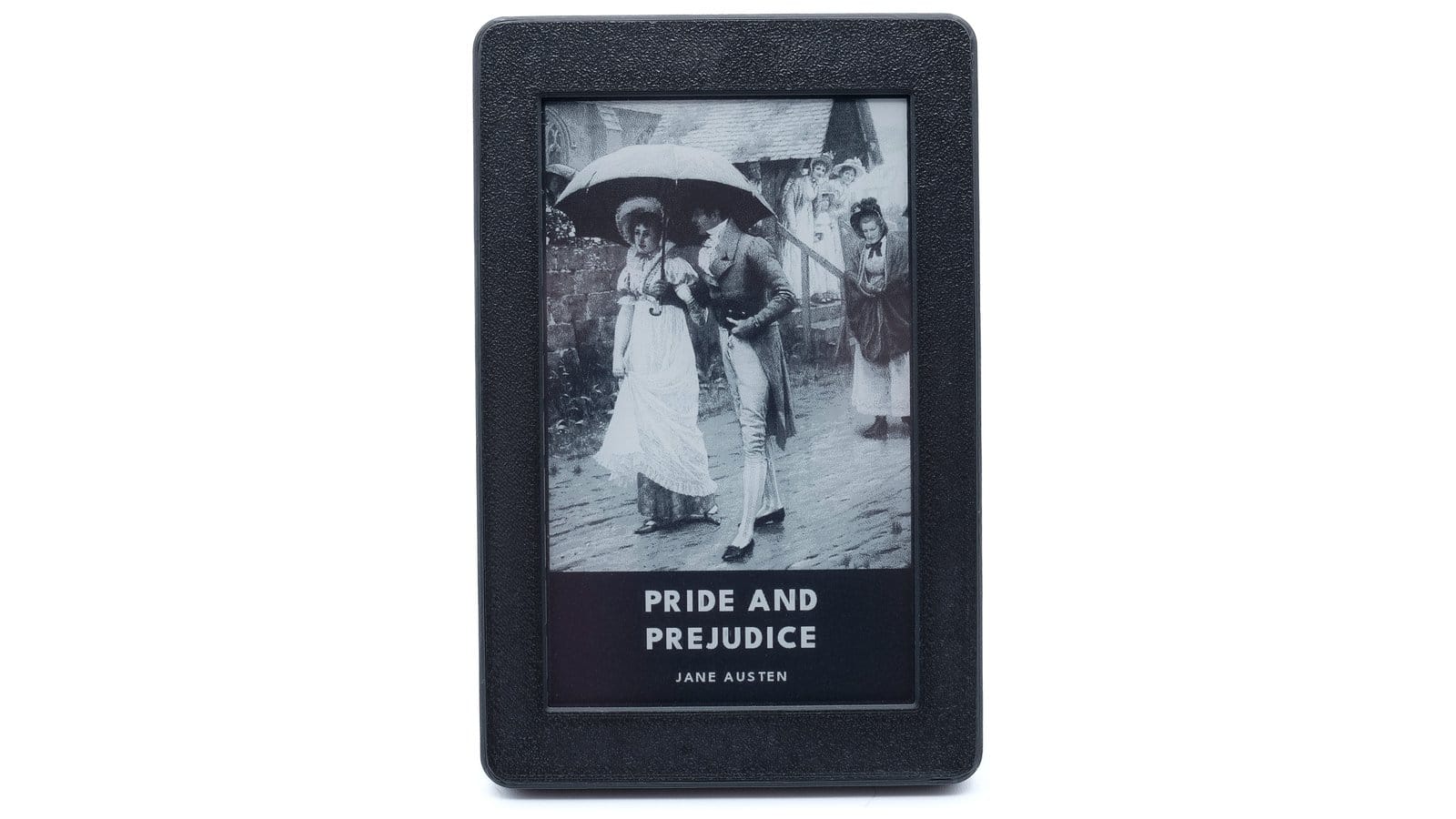
Frontlight uses five warm and five cool LEDs together, so you get a warm tone for reading in bed or something cooler for daylight, rather than being stuck with the single-temperature light.
At its core lies an ESP32-S3, paired with 16 MB of flash and 8 MB of PSRAM, the kind of arrangement you’d want for parsing EPUB files on a microcontroller instead of a full Linux SBC. The firmware itself is C++ on ESP-IDF and FreeRTOS, with SQLite quietly tracking your library’s metadata.
Typesetting gets some attention too: justified text with proper hyphenation (English, Spanish, French, and Italian dictionaries are included), inline dithered images, and text set in bitmap versions of open source Lucida Bright and Lucida Sans fonts, complete with true bold and italic weights.
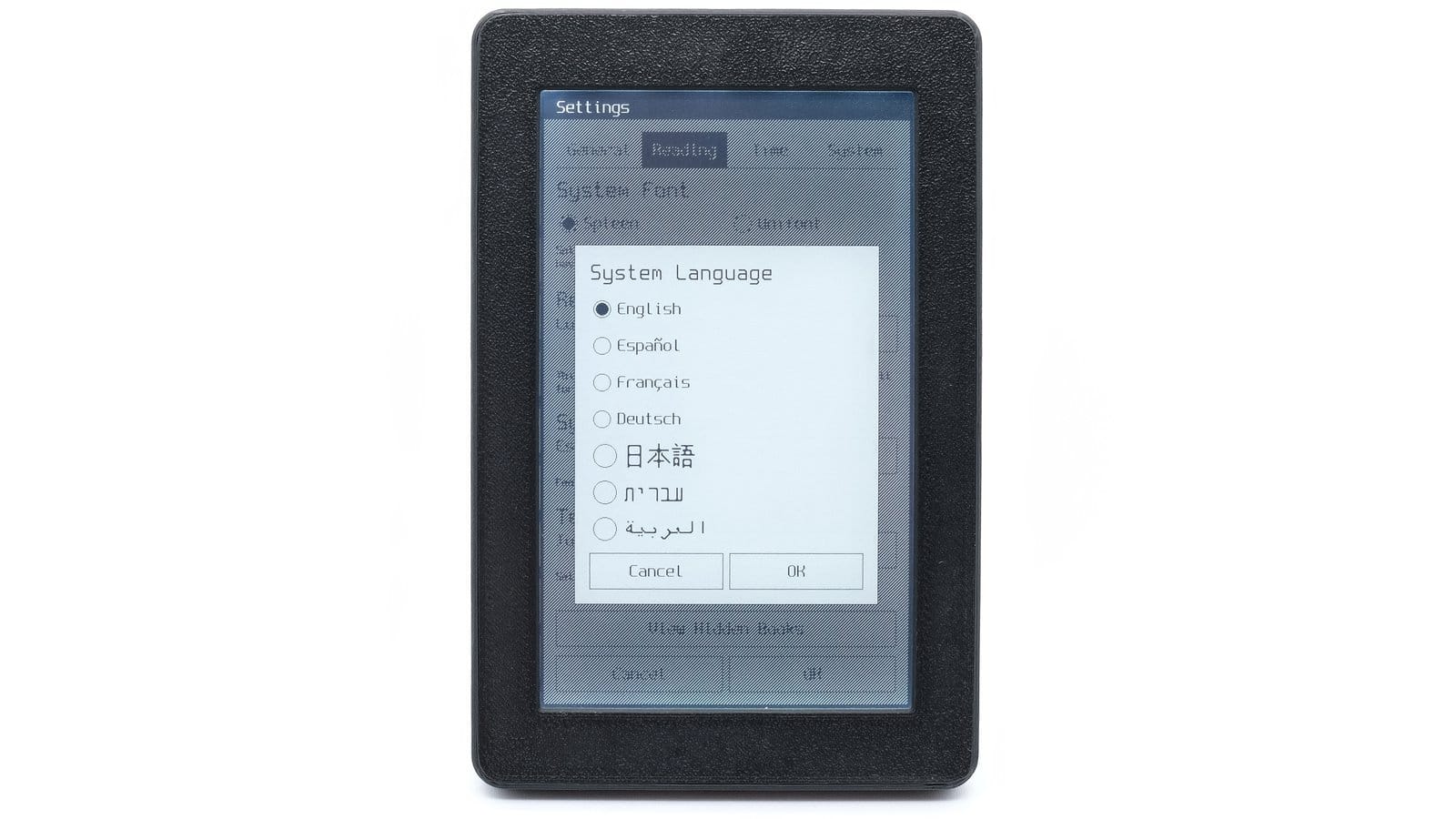
Language support is pretty impressive for a new device. GNU Unifont ships on the device as a fallback covering around 70,000 glyphs, the interface itself is localized into seven languages including Arabic and Hebrew. They have also implemented the Unicode bidirectional algorithm so right-to-left scripts shape correctly instead of just rendering backwards.
There’s no DRM support here, by design. Books load from a microSD card or over local Wi-Fi. You may also manage metadat of library with SQLite.
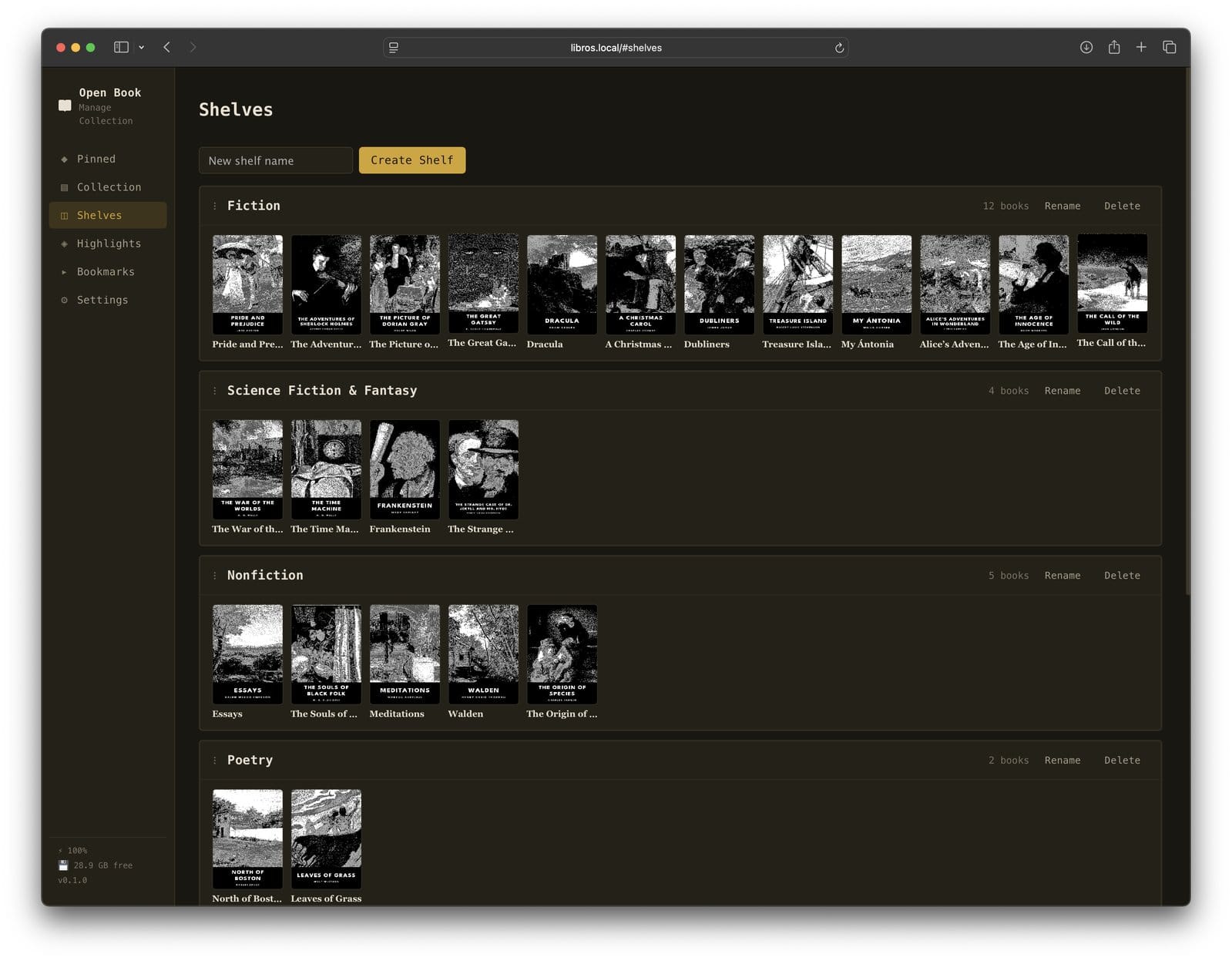
There is no companion app here. This ‘feature’ could be an inconvenience, too, if you like reading on more than one devices like your computer or smartphone. Perhaps later, something can be thought about it,
The 800 mAh (minimum) LiPo battery is user-replaceable, and the 3D-printed snap-fit case is designed to be taken apart, with printable CAD files included if you want to make your own in a different color.
Whatever happened to the original?
The original Open Book won Hackaday’s “Take Flight with Feather” contest in January 2020, a competition sponsored by Adafruit and DigiKey for Feather-compatible boards.
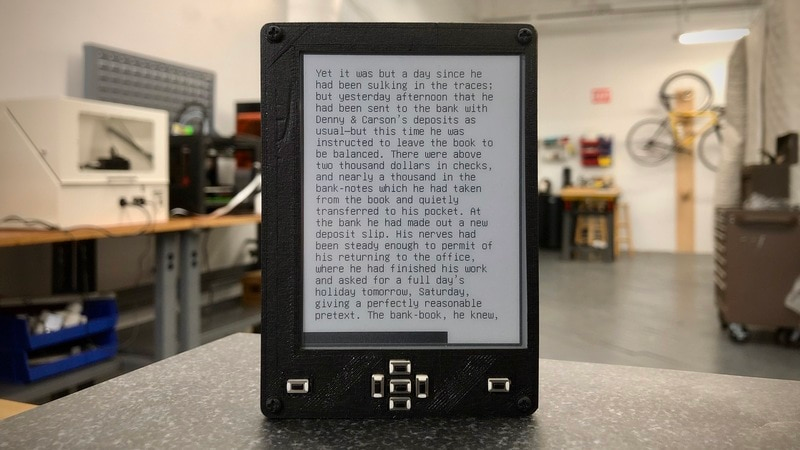
That win was supposed to mean a manufactured run of at least 100 units landing on DigiKey’s shelves. From what I recall, that specific retail run doesn’t seem to have fully materialized.
Castillo sold bare PCBs himself through Tindie starting mid-2020, and by that October, more than 100 Open Book and E-Book FeatherWing boards had shipped to makers willing to solder them together at home.
So it did shipped, sort of, just not like DigiKey retail run originally promised. But real boards did reach real people as a DIY kit rather than a finished product. The project kept evolving after that, through an RP2040-based “Open Book Abridged” and, eventually, a full reimagining that led to Open Book Touch.
The original Open Book had all its schematics and firmware public on GitHub from day one, before a single board existed. Open Book Touch is a bit different for now. Castillo has open sourced Focus, the C++ application framework that powers the device’s interface, and the firmware is MIT-licensed.
But the board files, enclosure CAD, and the Open Book Touch-specific firmware itself are staying private until the campaign ships, going public to backers first and everyone else after. This is what’s promised by the developer.
Get Open Book Touch
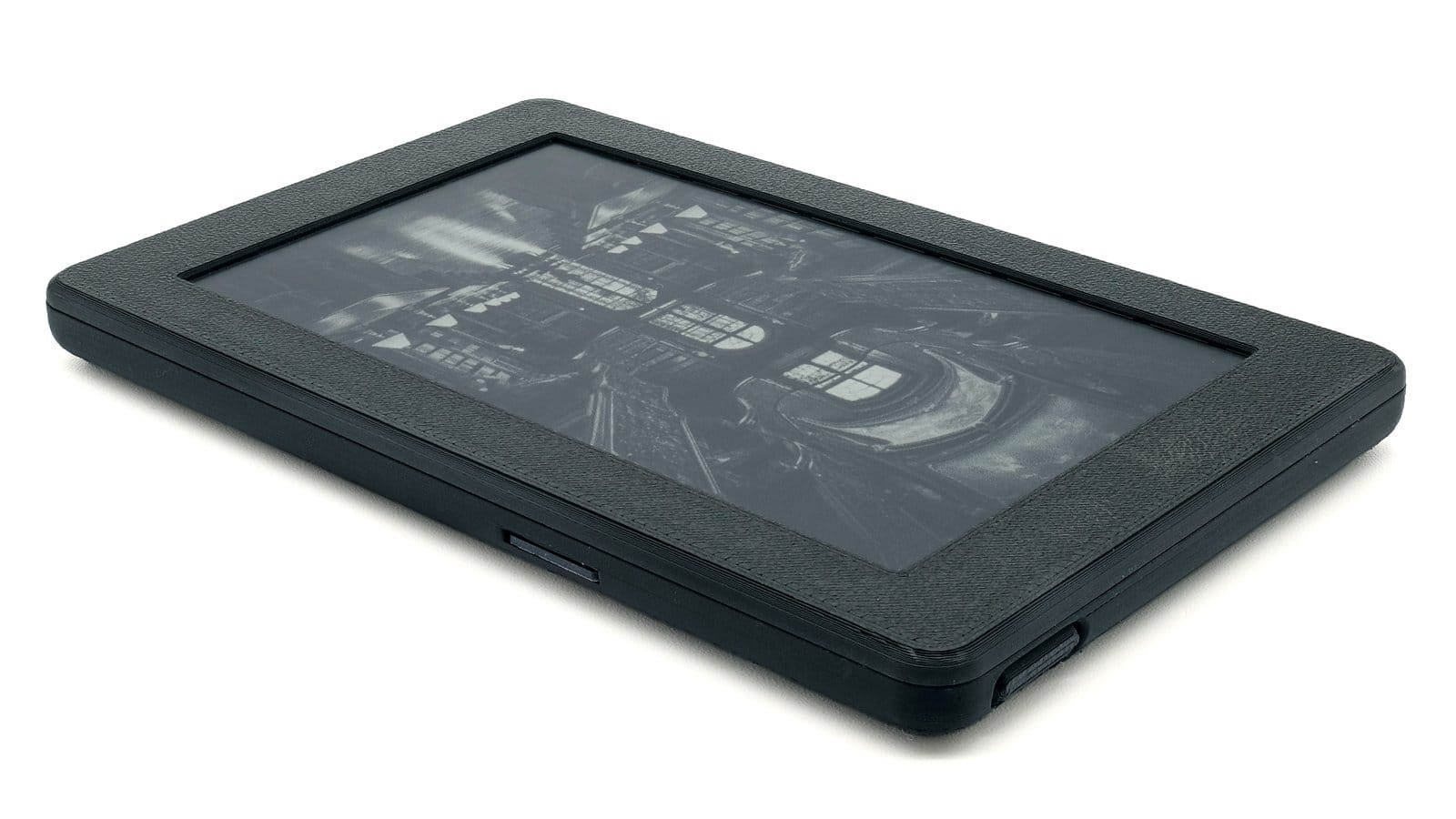
Open Book Touch is live on Crowd Supply now. At the time of writing, the campaign has raised $25,658 of its $45,000 goal from 131 backers, with about five weeks left to go.
Pledges start at $149 for the standard Open Book Touch (free US shipping, $12 elsewhere), with a $249 “Author’s Edition” in a special enclosure available only during the campaign.
Crowd Supply is targeting early 2027 to get the first units to backers, fulfilled through its usual partner, Mouser. Manufacturing runs through NextPCB’s Launchpad program, with the e-paper panel itself coming from Good Display.
If you just want the reading experience Castillo designed, the $149 tier gets you the full thing. Go for the $249 Author’s Edition only if the nicer enclosure matters to you, since the electronics inside are identical.
Suggested Read: If Open Book Touch is out of your price range or you’d rather build one yourself, we’ve rounded up several DIY open source e-reader projects you can put together at home.

Source: It's FOSS