MinIO Is Done With Open Source, What Are Your Options?
The MinIO GitHub repository was recently archived on April 25, 2026. But the thing is, it had been archived before, back in February, then briefly unarchived, and now it’s locked again. Whether MinIO flips the switch again is anyone’s guess, but it doesn’t really matter at this point.
The message has been clear ever since they put the project in maintenance mode.
MinIO is one of the most widely used self-hosted object storage solutions out there. It is S3-compatible, lightweight, and runs as a single binary, integrating with pretty much everything in the cloud-native stack.
It’s the kind of project you deploy once and forget about. Unless something breaks or a massive shift happens, like the move away from open source. Then you’re left scrambling for alternatives.
How we got here
This didn’t happen overnight. MinIO has been walking away from its open source community for well over a year.
It started in May 2025, when MinIO shipped a breaking release that removed most management features from the community edition’s web UI, along with external IDP logins via LDAP and OIDC, moving them to their enterprise product.
Then in October 2025, MinIO stopped publishing Docker images and pre-built binaries for the community edition entirely. Users who needed to patch a CVE that dropped the same month couldn’t just pull an updated image and had to build from source instead.
By December 3, 2025, the other shoe dropped when Harshavardhana, the co-founder of MinIO, pushed a commit to the repo’s README, declaring maintenance mode (linked earlier).
And then the repo was first archived in February 2026 and again in April 2026.
What replaces it
If you’re running MinIO in production today, your existing deployment still works. But you are on software that will get no new features, no compatibility updates, and no guaranteed security patches.
MinIO’s official stance is to redirect people towards their proprietary AIStor solution, but that’s a hard pass for anyone who prefers to stay open source. You don’t need to go down that path.
Here are the three open source alternatives worth looking at. 👇
SeaweedFS
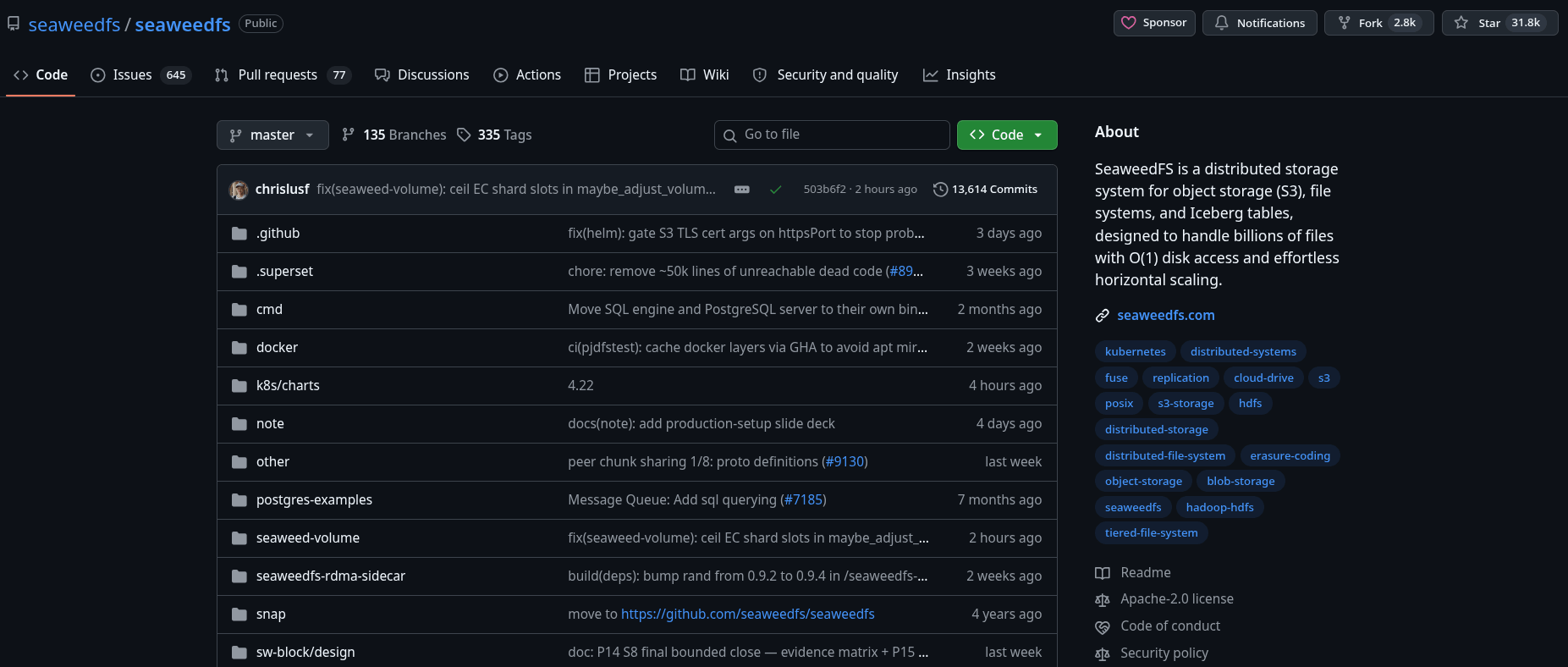
SeaweedFS is a distributed storage system written in Go, built around Facebook’s Haystack architecture and a few other systems. It handles S3-compatible object storage alongside blobs and files.
Its main advantage is its O(1) disk seek time that performs regardless of how many objects you store, making it particularly strong when dealing with billions of small files.
Before you ask, it is Apache 2.0-licensed, production-ready, and the closest thing to a drop-in MinIO replacement available right now.
Garage
Garage is a Rust-based object storage system built by Deuxfleurs, a French small-scale self-hosting service provider. It’s designed specifically for geo-distributed deployments on modest hardware; think multiple physical locations rather than a single high-performance data center.
It is small enough to run on various hardware, is simple to operate, and is well-suited for self-hosters and small organizations running storage across multiple physical locations. Not only that, but it is available under the AGPLv3 license.
RustFS
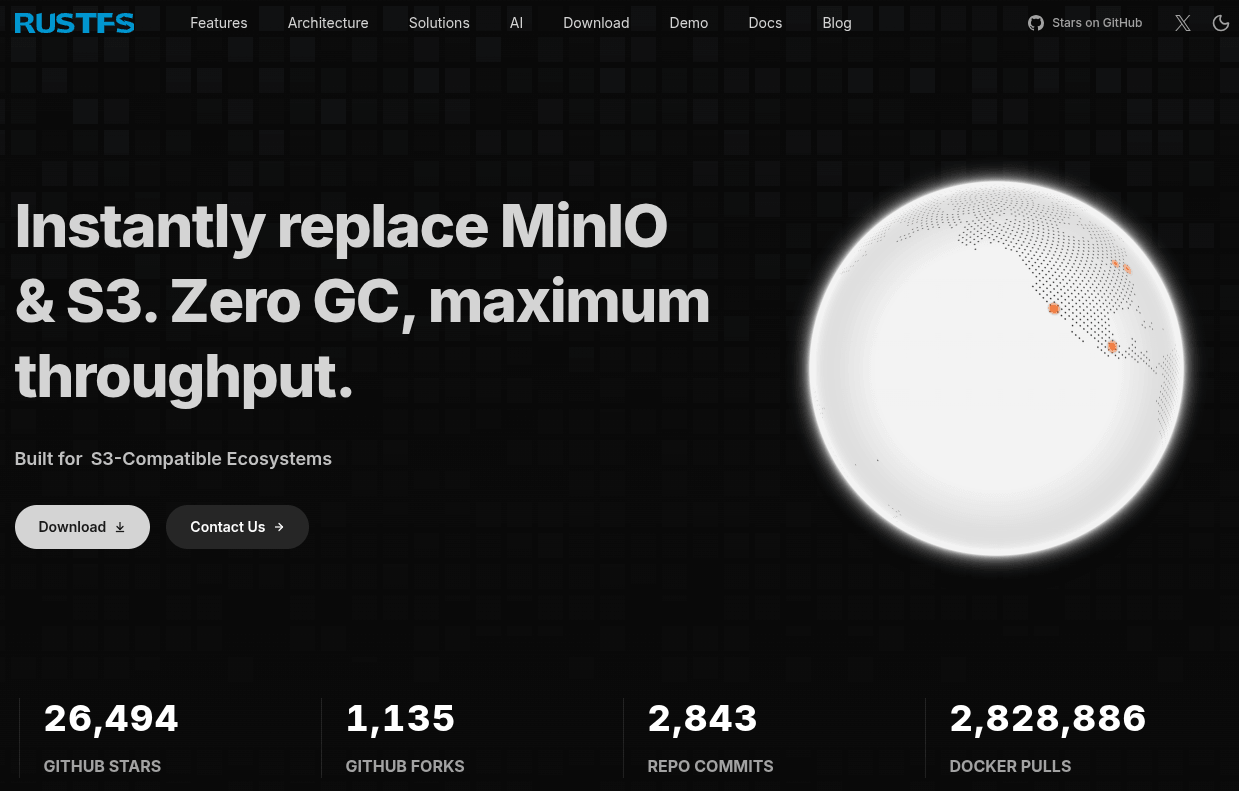
RustFS is the newest player in this space, written in Rust and released under the Apache 2.0 license. It positions itself as a direct MinIO successor, claims 2.3x faster performance than MinIO for small object payloads, includes a management console out of the box, and supports migration from existing MinIO deployments.
The catch here is that it’s still in alpha. Still worth keeping on your radar if you are planning a migration over the coming months, but you could also take a gamble on it if you like taking risks.
In the end, MinIO’s pivot to enterprise-only commercial software is its call to make. The open source community, for its part, is moving on.

Source: It's FOSS