LibreOffice Drives Europe’s Open Source Shift: A Growing Push for Digital Sovereignty
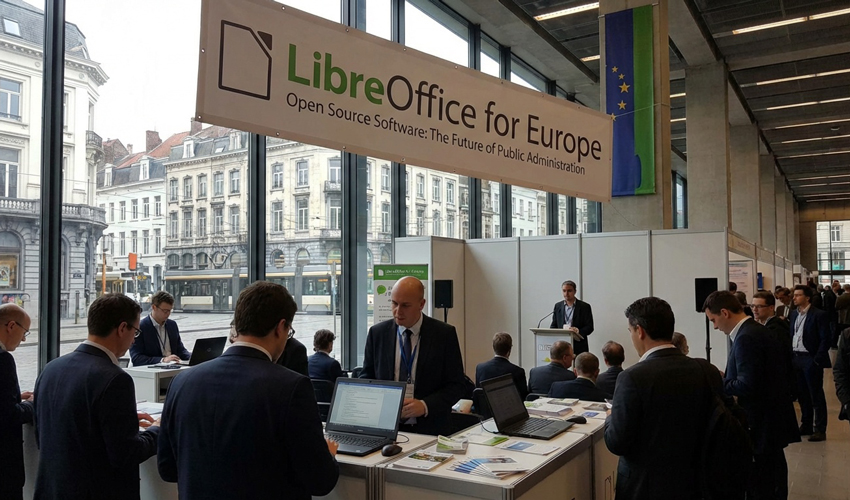
LibreOffice is increasingly at the center of Europe’s push toward open-source adoption and digital independence. Backed by The Document Foundation, the widely used office suite is playing a key role in helping governments, institutions, and organizations reduce reliance on proprietary software while strengthening control over their digital infrastructure.
Across the European Union, this shift is no longer experimental, it’s becoming policy.
A Broader Movement Toward Open Source
Europe has been steadily moving toward open-source technologies for years, but recent developments show clear acceleration. Governments and public institutions are actively transitioning away from proprietary platforms, often citing concerns about vendor lock-in, cost, and data control.
According to recent industry data, European organizations are adopting open source faster than their U.S. counterparts, with vendor lock-in concerns cited as a major driver.
LibreOffice sits at the center of this trend as a mature, fully open-source alternative to traditional office suites.
LibreOffice as a Strategic Tool
LibreOffice isn’t just another productivity application, it has become a strategic component in Europe’s digital policy framework.
The software:
- Is fully open source and community-driven
- Supports open standards like OpenDocument Format (ODF)
- Allows governments to avoid dependency on specific vendors
- Enables long-term control over data and infrastructure
These characteristics align closely with the European Union’s broader strategy to promote interoperability and transparency through open standards.
Government Adoption Across Europe
LibreOffice adoption is already happening at scale across multiple countries and sectors.
Examples include:
- Germany (Schleswig-Holstein): transitioning tens of thousands of government systems to Linux and LibreOffice
- Denmark: replacing Microsoft Office in public institutions as part of a broader digital sovereignty initiative
- France and Italy: deploying LibreOffice across ministries and defense organizations
- Spain and local governments: adopting LibreOffice to standardize workflows and reduce costs
In some cases, migrations involve hundreds of thousands of systems, demonstrating that open-source office software is viable at national scale.
Source: Linux Journal - The Original Magazine of the Linux Community